Wednesday, 3 February 2016

Good vs. popular DJs

What makes a good DJ? What makes a popular DJ? Are all popular DJs good? Are all good DJs popular? I think those are very interesting questions and I will give you my answers to them. Although it is difficult, I don't want to sound too judgemental in this post. I will just share my humble view here. :)

I think that not all popular DJs are good. And there are many great DJs that are not popular. In this text by “popular” I mean being invited to play frequently at quality events. How is that possible? It does not sound fair and right, does it?

In my opinion there is only one element that makes a good DJ: the music he or she plays. As simple as that, nothing else. But there are several elements that make popular DJ. I would classify them under 3 headings: music, personal aspects and self-advertising. The music is the most important, but personal aspects are also very influential. Self-advertising is probably overrated, but also plays a role. In a more visual way this would look like:

Influencers
A good DJ
A popular DJ
Music
100%
50%
Personal aspects
 
40%
Self-advertising
 
10%

As music that DJs play is the most important element, it deserves a separate post. I hope to write it soon. :)

You might be surprised but I strongly believe that personal aspects are almost as important as musical choices when we talk about reasons of popularity. Those personal aspects are: positive attitude, smile, physical attractiveness, dancing skills, number of friends, charisma, etc. All of them are absolutely positive, but don't make anybody's music better.

So why do those elements play such a big role? There are 2 reasons for that. The first one is very obvious: positive, smiling, attractive, dancing well people with charisma and friends add value to events. They attract more participants, make events more successful and enjoyable.

In my opinion today's tango world becomes a market, similar to the one for consumer goods or services. More and more often tango events become brands with a clear marketing strategy behind. Tango DJs are an important part of this strategy (e.g. the coolest DJs for the coolest event).

The other reason why personal aspects to a significant extent make a DJ popular is... organizers' ignorance. Some organizers simply don't have any clue about music or don't pay enough attention to it. I have witnessed instances when DJs were invited based on a recommendation of a friend of a friend of a friend :).  This is disrespectful to participants and risky for events' success.


The last element is self-advertising. Putting it in a commercial way: a DJ is a service provider and services sell better if they are advertised. There are 2 ways of advertising: direct (e.g. contacting organizers and asking them a job) or indirect (e.g. making a lot of fuss on Facebook, having a Youtube channel or a blog). Hang on... I have Facebook page, Youtube channel and you are reading my blog. Does it mean I...? :)

I don't have any problem with DJs' self-advertising. What I don't appreciate is when DJs push themselves (e.g. dancing or being extremely nice to someone just because he or she is an organizer).  I'm also a little bit bored with all DJ social media that don't offer any interesting content, merely advertising (e.g. FB pages with nothing else but DJing schedule or Youtube channels republishing songs that have been published many times in the past).

To summarise... All 3 elements (music, personal aspects and self-advertising) do have impact on a DJ's popularity. It is understandable why the latter 2 factors play a role. At the same time it is very unfortunate that they are so important. Some really great DJs don't play at events frequently only because personal aspects and self-advertising are not playing in their favour. And vice-versa some medium DJs play often mainly because they are cool, attractive, because they dance well or advertise a lot. I don't think this is a big issue, but it is important that tango dancers and organizers aware of it. More awareness in this topic might mean more conscious choices and better music at events.

Friday, 22 January 2016

Domingo Federico

It's been a while since my previous post. Once again I want to give it a try and write more frequently. Let's see how it goes :).


I'd like to share with you some words about Domingo Federico. I think his music is amazing and it is not appreciated as much as it should be. In his early years, Domingo became interested in playing violin and bandoneón. His father gave him first classes. After some years, he eventually became a bandeonist. In 1941 Federico joined the famous orchestra of Miguel Caló. In 1943 he formed his own orchestra and started recording one year later.

For more detailed biographical and discographical information please go to:
Todo Tango - Domingo Federico

Most of Federico's songs (especially earlier ones) are melodic and romantic, some of them are dramatic. At the same time they have a very characteristic pulsing rhythm. I think it is this very unique combination of melody and rhythm that makes music of Domingo Federico so special.
My favourite recordings come from the 1940ies, but there are a few pearls from 1950ies. There are also some recordings from 1968-69, but they are less interesting and I would not play them in milongas.

The most important singer of the orchestra was Carlos Vidal. He recorded around 30 songs, of which several are masterpieces. It is pretty easy to build a good tanda with those songs: with good ingredients a dish is likely to taste well :).

All songs below are with Carlos Vidal:

And an amazing vals sung by duo Vidal and Oscar Larroca:

Several instrumental songs from 1944-45 are also worth mentioning:

And some other songs that should be a must in repertoire of each self-respected DJ :). Building those songs in a tanda takes a bit more experience, but give it a go!

An absolute hit of many marathons and festivals:

Another great song similar to Leyenda Gaucha:

The only tango recorded with Enzo Valentino:
Cualquier Cosa, 1951
But what a tango!

A great version of Y Todavía Te Quiero sung by Armando Moreno (the same who was recording with Enrique Rodríguez:

The most romantic song by Domingo Federico! Sung by Oscar Larroca (the same who will later sing the famous Volvamos A Empezar with Alfredo de Angelis):

Saturday, 21 March 2015

Miguel Caló with Alberto Podestá


In the previous post I wrote that one of Caló's contributions to tango is discovering great singers Raúl Berón and Alberto Podestá. I'm particularly grateful for the second one, since he is one of my favorite singers.

I split recordings of Podestá with Caló into early and late ones. Early recordings cover only 4 tangos. In my opinion it is a mixed bag. "Yo Soy El Tango" is very light, almost kitschy. "Percal" is deep and very emotional. The other 2 songs: "Si Tu Quisieras" and "Dos Fracasos" are somewhere in between.

Alberto recorded those songs under the name of Juan Carlos Morel. Podestá was name after his mother. At that time in Buenos Aires there were some other singers with this name and Alberto wanted to avoid confusion. It was Carlos di Sarli who convinced him to use name Podestá. He said: "Kid, from now on you will be Alberto Podestá and out of all singers with this surname only you will endure".
  

The late recordings cover period from 1954 till 1972, the year when Miguel Caló passed away. Among recordings from this period we will find "Qué Falta Que Me Hacés" - possibly the best tango of all times! This song has everything a great tango should have: beautiful melody, a dose of drama, perfect orchestration, clear & regular rhythm. And let's not forget about the voice of Podestá. Sounds like a perfect recipe for a hit!

Apart from tangos, Podestá recorded with Caló's orchestra a few very popular valses... I will write about them some other time. Stay tuned :)


Early recordings:

Percal, Miguel Caló canta Alberto Podestá, 1943
Yo Soy El Tango, Miguel Caló canta Alberto Podestá, 1941
Dos Fracasos, Miguel Caló canta Alberto Podestá, 1941
Si Tu Quisieras, Miguel Caló canta Alberto Podesta, 1941

Late recordings:

Qué falta que me hacés, Miguel Caló canta Alberto Podestá, 1963
Bailan Javier Rodríguez y Geraldine Rojas

El Bazar De Los Jugetes, Miguel Caló canta Alberto Podestá, 1954
Cómo Le Digo A La Vieja, Miguel Caló canta Alberto Podestá, 1954

Saturday, 14 February 2015

Miguel Caló - Overview


Miguel Caló is a name each tanguera and tanguero should be very familiar with. He is best known for his beautiful Golden Age recordings from 1940ies. But that is not all, we should know more...

Caló started his musical career in mid twenties. In 1926 he joined the orchestra of Osvaldo Fresedo, as a bandoneon player. A year later he joined Francisco Pracánico. His first own orchestra was created in 1929, but the project did not last long. Only 3 years later, in 1932, the second attempt of creating orchestra was successful.
Miguel Caló should be appreciated for his great musical legacy. Further more, he had another contribution to tango by introducing two greatest singers in the history: Raúl Berón and Alberto Podestá.


To learn about Caló´s music in more systematic way, I suggest to split his work into 3 parts:

- early recordings (1932-1938)
- Golden Age recordings (1940ies)
- late recordings (1950-1972)

Golden Age recordings are very famous and you will hear them in most milongas. The music from the other two periods is much less known, but also very interesting and worth discovering.

For more detailed biographical and discographical information please go to:
Todo Tango - Miguel Caló

In the next post I will start with Miguel Caló and Alberto Podestá...

Monday, 9 February 2015

European Tangos part 1


The opinions on European tangos are very mixed. Some conservative tangueros don't consider them appropriate for milongas. Other, more “progressive” dancers and DJs simply love it! A few years ago a festival organizer ”advised” me not to play any non-Argentinian music because the dancers don’t appreciate it. Playing it turned out to be a great success :).

As usually, I think that the best approach is in-between. European tangos should be played in milongas, because they add variety and make milongas more interesting for the dancers. At the same time those tangos should not be abused by playing them too often. The dispute between "conservative" and “progressive” sides is not so important anyways… Vast majority of dancers will probably not realize that they are hearing and dancing to European music :).

In this and few other posts I will present you some of my favorite European orchestras and tangos. Some of them are famous and popular. Others are unknown, but worth discovering.

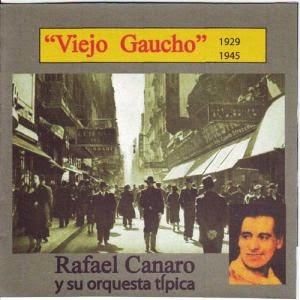
The most famous and frequently played European orchestra is Rafael Canaro. Some time ago I have written a post about him:


Jean Auguste Pesenti was a leader of another orchestra, which I would like to present in this post. Unfortunately, I can’t find any online information about this ensemble. You can find several interesting recordings below:

Sunday, 25 January 2015

Aníbal Troilo with Francisco Fiorentino


If you go to any milonga with traditional music, you will probably hear at least one tanda of Troilo. If you do, there is a high chance that Francisco Fiorentino will be a singer.

Francisco Fiorentino started his career as a bandoneonist, not as a vocalist. In 1928 he joined the orchestra of Francisco Canaro. The orchestra leader realized that Fiorentino is a talented singer. Since then, for several years Fiorentino did both playing and singing in orchestras of Juan Carlos Cobián, Roberto Firpo, Pedro Maffia, Juan D'Arienzo, Roberto Zerrillo, Minotto Di Cicco and Francisco Canaro.

In 1937 Fiorentino joined the orchestra of Troilo and stayed working with him until 1944. This was the top period in his career. Afterwards, he created his own orchestra lead by Astor Piazzolla, but it did not turn out to be a success. For more detailed biographical and discographical information please go to:
Todo Tango - Francisco Fiorentino (available only in Spanish)

I split the recordings of Troilo with Fiorentino into 2 groups: early (from 1941 till 1942) and late (from1942 till 1944). It is much easier to build consistent tanda if you stick to songs from one period only. More experienced DJs can obviously mix them.

Songs from early period are very rhythmic and fast (65-70 beats per minute). They are full of syncopations. A tanda of songs from this period will never fail. Both beginners and advanced dancers will enjoy it and the energy in the room will go up! From this period comes the famous recording of En Esta Tarde Gris.

Songs from late period are very melodic and slow (58-65 beats per minute). If played in milonga, some of them can be challenging for less experienced dancers. You can use tanda of recodings from that period after a tanda of milonga, when you want to calm down the dance floor and bring more emotions.

Song examples:

Early period:

En Esta Tarde Gris, canta Francisco Fiorentino, 1941
Bailan Gaston Torelli y Noelia Hurtado

Tinta Roja, canta Francisco Fiorentino, 1941
Bailan Paulina Cazabon y José Luis Gonzalez

El bulín de la calle Ayacucho, canta Francisco Fiorentino, 1941
Bailan Javier Rodriguez y Andrea Misse

Late period:

Malena, canta Francisco Fiorentino, 1942

Cada Vez Que Me Recuerdes, canta Francisco Fiorentino, 1943

Sosiego en la noche, canta Francisco Fiorentino, 1943

Friday, 23 January 2015

Aníbal Troilo - Overview


Aníbal Troilo´s orchestra is put by most experienced dancers and DJs in top 4 of the best and most important  formations in the history of tango (together with d´Arienzo, di Sarli and Pugliese). I´m actually quite surprised that I have not written about it before. :) I feel that this orchestra is recently  becoming more popular and is now "in fashion".

Troilo formed his first own band in 1938. Before he played with many famous and influential tango musicians: the violinists Juan d'Arienzo, Julio de Caro, Alfredo Gobbi and Elvino Vardaro, the pianist Osvaldo Pugliese, the bandoneonists Ciriacio Ortiz, Juan Maglio, Luis Petrucelli.

Troilo had been recording between 1938 and 1971. The most famous recordings come from the 40ies: instrumentals and those with singers Francisco Fiorentino & Alberto Marino. But there is more to discover. Recordings with singer Floreal Ruíz (1944-1948) are very good and danceable. Some of the instrumentals from the 50ies can be also used in milongas. The rest of the recordings are very interesting, but mostly only for listening.

The orchestra of Troilo is one of the few that has a large selection of  tangos, valses and milongas. Valses are very popular and can be heard frequently in regular milongas, festivals and marathons. Milongas are good and danceable, but for some reason they are not regularly  played. As a dancer,  I don´t enjoy them much and I don´t use them as a DJ. The floor usually gets pretty empty when you hear them. :
 
If you are a tango DJ or a music collector you should definitely get the 16 CD collection "Obra Completa en RCA". Most of you will need  only the first 7 CDs (recordings up to 1948). Later recordings are less interesting from dancing perspective. The covers of those CDs look like the following:


For more detailed biographical and discographical information please go to:
Todo Tango - Aníbal Troilo

In the next post I will start from presenting Troilo´s work with Francisco Fiorentino. As a teaser, you´ll find a few of my favorite songs below...

En Esta Tarde Gris, canta Francisco Fiorentino, 1941

Tinta Roja, canta Francisco Fiorentino, 1941

Lagrimitas De Mi Corazón, cantan Edmundo Rivero y Floreal Ruiz, 1948

Sunday, 17 November 2013

Orquesta Típica Victor (OTV) - Golden Age recordings


From its creation Orquesta Típica Victor was recording in Guardia Vieja style. The songs from that period were very simple and rhythmical, all the instruments were playing together - "a la parilla". Some other popular orchestras playing in that style were: Adolfo Carabelli, Sexteto Carlos di Sarli, early Francisco Lomuto and Francisco Canaro. In the middle of 30ies the style changed and Golden Age period started. The music became more sophisticated, melodic and romantic. Also OTV did follow that trend.

Songs from that period are probably less known among the dancers than the ones from the Guardia Vieja epoch. I like them a lot, both as a DJ and as a dancer. I'd like you to pay special attention to two of them.

"Una Vez" is the first one. I think that it is currently the most popular song of OTV from that period. It is truly beautiful, its melody usually brings all the dancers to the dance floor. It happens that some songs become popular in the milongas because of some famous couple's performance video on Youtube. I think "Una Vez" is an example of it. It got much more popular (at least at the milongas I was attending) after Noelia Hurtado and Carlitos Espinoza performed to it (link to the video below).

By the way: Noelia had also an important contribution to promoting another tango hit - "Invierno" by Francisco Canaro. At that occasion it was still with Pablo Rodríguez.

Another song to check is "Loca", a song better known from d'Arienzo's repertoire. The version by OTV is pretty much completely unknown. The quality of the recording available is not great and it is not easy to build a consistent tanda with it. I would rather leave playing it during marathons with crowd of experienced dancers.


Song examples:

Una Vez, Canta Ortega del Cerro, 1943
Bailan Carlitos Espinoza y Noelia Hurtado
Bailan Murat y Michelle Erdemsel

Bajo El Cono Azul, Canta Alberto Carol, 1944
Bailan Anita Monteagudo y Pablo Retamar

Tu Vida Es Mi Vida, Instrumental, 1937

Mi Taza De Café, Canta Alberto Carol, 1944

Loca, Instrumental, 1944

Adios Buenos Aires, Angel Vargas, 1938
Bailan Juan Carlos Martinez y Nora Witanowsky

Desesperanza, Canta Mario Pomar, 1939

Saturday, 16 November 2013

Orquesta Típica Victor (OTV) - Overview


From the beginnings of tango "industry" some of the recording companies were creating their own tango orchestras. Their main purpose was to represent the companies and make recordings. They usually did not perform in public. Example of such orchestras are: Orquesta Típica Brunswick, Orquesta Típica Columbia, Orquesta Típica Select. But by far the most famous one was Orquesta Típica Victor (OTV).

The orchestra was created in 1925 and existed until 1944. Throughout its history many of the best tango musicians worked there. Adolfo Carabelli was the first leader of the orchestra. Among other famous names we could find bandoneonists: Luis Petruccelli , Ciriaco Ortiz, Carlos Marcucci, Pedro Laurenz; violinists: Agesilao Ferrazzano, Elvino Vardaro, Antonio Buglione, Cayetano Puglisi. Most of those musicians have created their own orchestras after leaving OTV. Among the most important singers we should list: Roberto Díaz, Carlos Lafuente, Alberto Gómez, Ernesto Famá, Luis Díaz, Ortega del Cerro, Angel Vargas.

Between 1925 and 1937 the orchestra was recording in Guardia Vieja style. Later on it followed trend and moved to the Golden Age style. To read about the difference between those styles please check one of my previous posts: Guardia Vieja vs Golden Age.

In the repertoire we will find very wide selection of tangos but also many valses and a few milongas. In my next posts I will write more about them and give many examples...

For more detailed information please go to:
Todo Tango - Orquesta Típica Victor

Saturday, 23 March 2013

Guardia Vieja vs Golden Age - part 1


For quite some time already I wanted to write a post about terms that most of us have heard many times, but probably we don't always know what exactly they mean. Those terms are: Guardia Vieja, Guardia Nueva and La Época De Oro. Before writing more, once again I'd like to highlight that I'm am not an expert in the history of tango. My knowledge is based on some basic reading, talking to knowledgeable tango friends and mainly on listening!

While reading some texts about Guardia Vieja, Guardia Nueva and La Época De Oro, I came across several different, sometimes contradictory definitions. Some sources define Guardia Vieja (Old Guard) as the period in the history of Tango covering the years 1880 - 1920. Then comes Guardia Nueva (New Guard) and lasts from 1920 till 1960. La Época De Oro (Golden Age) is not mentioned at all. Even though this classification may be correct, from our perspective (21st century tango dancers and DJs) it does not seem to be very logical and useful.

Another definition cuts the history of tango music in the following way: Guardia Vieja 1880-1925, Guardia Nueva 1925-1935, La Época De Oro 1935 - 1955. This categorization is much closer to my heart and seems much more logical.

And how do I see it? The period before 1925, was the time when the music we are dancing today in milongas was being formed. It starts at the end of the XIX century with "payadores"- folk artists singing accompanied by a guitar. Later came the trios: a flute, a guitar and a violin. Later the bandoneon was added. The big revolution came when the piano replaced the guitar (both of them are string instruments). When I check my collection, I can hear the piano for the first time in recordings of Roberto Firpo's orchestra from 1919. And this was the moment when the tango music started reminding the music we all know today. During the next 5-6 years, the music did evolve further. Together with the music also technology improved. Around 1925 we are ready! The music has developed in a way that it is interesting for the dancers and the quality of the recordings allows us to use it in the milongas.

So the period before 1925 is very important in the history of tango, but it is not that important for us as dancers and DJs. The period between 1925 and 1935 is what I call Guardia Vieja. The music at that time is rhythmic and fairly simple. Most instruments play together and the same (a la parilla). The most important orchestras from this period are: Orquesta Tipica Victor, Adolfo Carabelli, Sexteto Carlos di Sarli and my favorite Francisco Canaro.
In 1935 we have a big change: Juan d'Arienzo arrives with his new style. Many of the existing orchestras change their styles (e.g. OTV, Carlos di Sarli, Fresedo) and other new, great orchestras are formed. This is the best period in the history of tango music and for that reason it is called Golden Age. The music becomes much more sophisticated. Instruments become much more independent (that makes dancing to that music so interesting, we can choose different instruments to dance to). This period lasts until approximately 1960. Around that time tango dancing lost its popularity in Buenos Aires. This is the moment when dance and music take different directions. To a big extent this change of direction can be linked to the genius and great tango musician: Astor Piazzolla.

So here we are: 
- before 1925: music not yet for dancing
- 1925 - 1935: Guardia Vieja period
- 1935 - 1960: Golden Age period
- after 1960: music not for dancing anymore

Don't get me wrong. I don't mean that after 1960 there was no music recorded that can be used in milongas. Myself I do play occasionally some late d'Arienzo (instrumental, with Valdez or Ramos), late Pugliese (I love A Evaristo Carriego or La Mariposa), Calo (e.g. Que falta que me haces with Podesta). But those are rather exceptions.

In one of the coming posts I will focus more on Guardia Vieja and Golden Age period. I will share my experience as a dancer and as a DJ. For now check the song examples below...

Song examples:

Before 1925


Golden Age (1935-1960)

Wednesday, 6 March 2013

Edgardo Donato - Milongas


In my previous post I have written a little bit about the theory of the milongas and one possible way of categorizing them. Now it's time to get more into practice:). I'm quite sure that Donato's milongas are in the top 3 most frequently played milongas in Europe (with Canaro and d'Arienzo). The songs have a very warm and soft tone, which has probably quite a lot to do with the voice of Horacio Lagos and the use of the accordion.

The milongas of Donato are very playful and one never gets bored with them. Every time I hear  them, I immediately look for a partner to dance. While dancing, I always smile :). Very often I add some spice to the dance by doing some "extras" (e.g. special pause, change of level, etc...) - The music provides lots of opportunities to do them. Very often experienced followers who know the music well, expect those "extras" and to surprise them.... I don't do anything. It's a great game to play!

Amongst the songs you'll find quite a big variety in terms of speed. The slowest songs (El Torito, Papas Calientes or El Lengue) start with 80 bps. The medium speed songs are the most famous and popular ones (e.g. Ella Es Así or Porteña Linda). The fastest songs have really great energy: the most famous is surely La Milonga Que Faltaba.

Enjoy listening and .... dancing :)


Song examples:

Slow milongas:
El Torito, Instrumental , 1939
Papas Calientes, Instrumental, 1937
El Lengue, Instrumental , 1940

Medium speed milongas:
De Punta A Punta, Canta Horacio Lagos, 1939
Ella Es Así, Canta Horacio Lagos, 1938
Porteña Linda, Canta Horacio Lagos, 1940
Sácale Punta, Canta Horacio Lagos, Randona, 1938

Fast milongas:
Campo Afuera, Canta Horacio Lagos, 1940
Milonga Que Faltaba, Canta Horacio Lagos, 1938, Baila Loukas Balokas - Georgia Priskou
Repique Del Corazón, Cantan Horacio Lagos, Romeo Gavio, 1941

Sunday, 27 January 2013

MILONGAS


It has been a while since my last publication in this blog. The last weeks have been very busy but now the time has come to start writing again! Originally, I was going to write a post about the milongas of Edgardo Donato. When I thought about the introduction, I realized that the topic can be interesting enough for a stand-alone post. So here it comes... Donato's milongas will follow very soon.

It is always very difficult to make any classification of the tango music. Any "label-putting" carries some risks (there are always some exceptions, we simplify the topic too much, etc...). But still I believe it is wise to classify the music, as it helps us understand the basics and learn more about it. So here comes my classification of milongas... I split them into the following groups:

1) Guardia Vieja style milongas
2) Milongas of d'Arienzo
3) Golden Age milongas

This split might seem very simplistic to many of you. But there's quite some logic behind it and many implications for both dancing and DJ-ing.


1) Guardia Vieja style milongas are the oldest ones. The first song I use while DJ-ing dates back to 1932 (Milonga Sentimental of Adolfo Carabelli). The milongas in this group are very light and playful. In general they are very easy to dance (especially the slow ones). They are perfect for all events and dancers of all levels should appreciate them. In this category we will find the milongas of:
  • Francisco Canaro (from 1930ies)
  • Edgardo Donato
  • Francisco Lomuto (most of them are really fast)
  • Orquesta Típica Victor (there are only 2 frequently played songs)

2) Milongas of d'Arienzo. You might be surprised why I put the milongas of one orchestra in a separate category. I think those songs are distinctive enough to treat them separately. They are less playful than the previous ones. The rhythm is dominant, they are very dynamic. One could even say that they are a bit "aggressive". They are relatively difficult to dance.

3) Golden Age milongas. In the beginning of 1940ies the tango music changes significantly. This change did not spare milongas. After the playful and rhythmical milongas of  the 1930ies, the milongas of the 1940ies become much more melodic. This is the main characteristic of this period. In some songs the rhythm is hardly present (e.g. Zorzal by di Sarli). Those songs are generally sophisticated, very difficult to dance and mainly advanced dancers appreciate them. In this category we will find milongas of many orchestras. E.g.:
  • Angel d'Agostino
  • Aníbal Troilo
  • Carlos di Sarli
  • Miguel Caló
  • Pedro Laurenz
  • Ricardo Tanturi
  • Rodolfo Biagi
Many dancers don't appreciate milongas from this category. I have heard several times comments such as: "this is bad, not danceable music" - that's obviously not the case. As a dancer, I'm not a big fan of Golden Age milongas, but I appreciate them and I know that it is valuable and important music (even if it is less playful and more difficult to dance). I think it would be great if the dancers knew tango music history and its evolution a little better. This would help them to understand and appreciate good tango music, despite their personal preference and dancing level.

Song examples:

1) Guardia Vieja style:


2) Milongas of d'Arienzo:


3) Golden Age Milongas:


Saturday, 1 December 2012

Tango DJ interviews


Today I have decided to write a post that will be completely different from the others. A few months ago SuperSabino, a great and popular DJ from Italy, came up with a very interesting initiative. He started interviewing tango DJs and the text of the interviews can be found at his blog:

http://supersabinotango.blogspot.hu/

Please visit the blog and read as much as you can. You will really find valuable comments that are interesting not only for tango DJs, but also for all the dancers.

I have been one of the interviewed DJs. If you are interested in reading my interview, you can check the following link:

http://supersabinotango.blogspot.hu/2012/10/konrad-krynski-i-think-that-in-every.html

All the DJs got the same set of questions. Four in particular attracted my attention :

1) Three orchestras that can not miss in one evening?
2) Your three favorite orchestras, which may also be different from the previous ones?
3) What are the three bands or singers you can not stand?
4) What is the band most underrated by the general public and which is the most overrated?

At the moment there are 28 interviews available. The DJs are from Argentina and Europe (mainly Italy, but many other countries are represented as well). I thought it could be interesting to put the ideas of those DJs together and see what is the outcome... So here are the results of my small analysis.

The question 1 and 2 were answered in the following way:


Question 1 Question 2
D'Arienzo 89% 57%
Di Sarli 89% 54%
Troilo 39% 25%
Canaro 21% 32%
Biagi 21% 25%
Pugliese 21% 50%
Fresedo 18% 29%
Calo 4% 11%
D'Agostino 4% 4%
Tanturi 4% 7%
Laurenz 4% 14%
Demare 0% 4%
Lomuto 0% 7%
Garcia 0% 4%
OTV 0% 4%
Varela 0% 4%
Rodriguez 0% 7%
Piazzolla 0% 4%


Pretty much all DJs agree that d'Arienzo and di Sarli are by far the most important orchestras. There are 7 orchestras that clearly come ahead, when talking about must-have-in-milongas music.

There is quite a big difference between personal preferences of the DJs (question 2) and what they think should be played in milongas (question 1). It terms of personal preference, Pugliese is much more appreciated, whereas d'Arienzo and di Sarli are appreciated a bit less, but they are still on the top of the ranking.

When asked about orchestras and singers that the DJ's "can't stand" the first comment in many cases was that "can't stand" is "maybe too much". But still there were some names given...The "winner" in this category is.... Alfredo de Angelis - 10 DJs mentioned they don't like him (either in general or some particular parts of his recordings). I'm not a big fan of de Angelis myself and actually I have been challenged about it by some readers of my blog.. It looks like I'm not alone in my preferences:). The second place in "the least appreciated" category went to.... Héctor Varela. His name was mentioned by 7 DJs (surprisingly I´m not a big fan of Varela either :). The third place went to Enrique Rodriguez with 2 votes only... Other orchestras mentioned (by 1 DJ each) were Firpo, Villasboas, Francini-Pontier, Malerba, OTV, Sassone.

Concerning the over and under rated orchestras: There isn't a common agreement on this topic. Troilo and Pugliese seem to be underrated in the opinion of DJ 7 and 4 respectively. Overrated orchestras: Varela (no surprice - 5 DJs) and Canaro (5 DJs). Those were the only frequently repeating answers. Quite many DJs say that some "older" orchestras (Canaro, Donato, Orquesta Tipica Victor) are overrated and too frequently played, in Europe in particular.

I think that if we put the comments of those 28 DJs together we will gain a huge amount of tango knowledge and experience. Those people come from different countries, are of different age and have different tango background. However, they have similar preferences and tastes. I think that the results is an indicator of what is good, valuable tango music and also what is less important and not that good.

This does not absolutely mean that we need to go against our personal preferences! If one loves and gets inspired by the music of de Angelis and Varela - that's great! The most important is to enjoy the dance and feel the music deep inside.